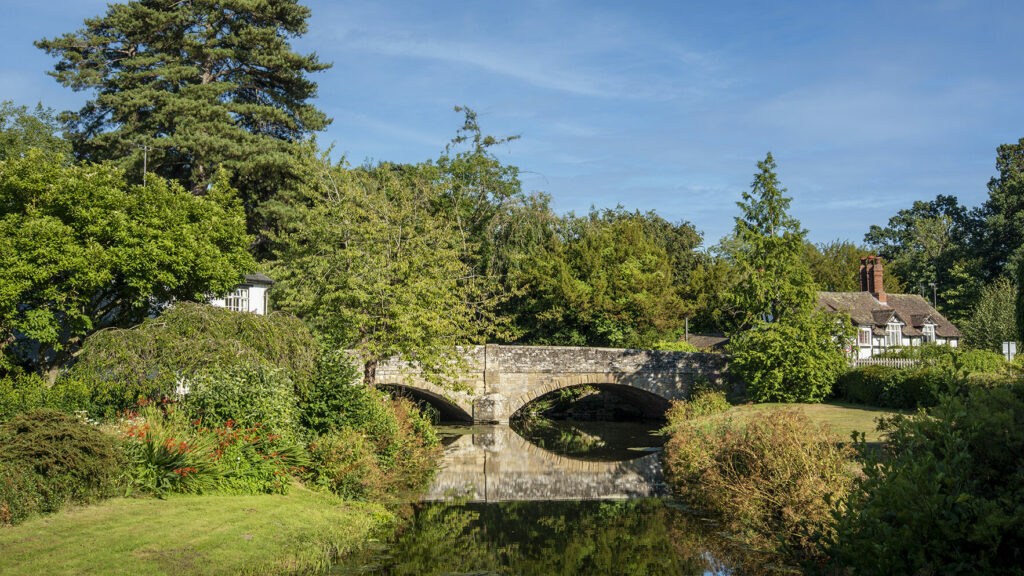
Herefordshire’s famous Black and White Village Trail takes you through some of the most stunning Tudor villages in England. Here’s how to explore it from Discover Parks.
Clare Fischer
Editor
Herefordshire is cattle and cider country. But it’s also famous for its network of beautiful Tudor villages. The Black and White Village Trail is a 40-mile circular route through the very best of them.
Black and White village walks
Right on the doorstep of Discover Parks in North Herefordshire are some of the most iconic villages in the UK. In this rural landscape, near the England/Wales border, nestles a network of colourful black and white villages!
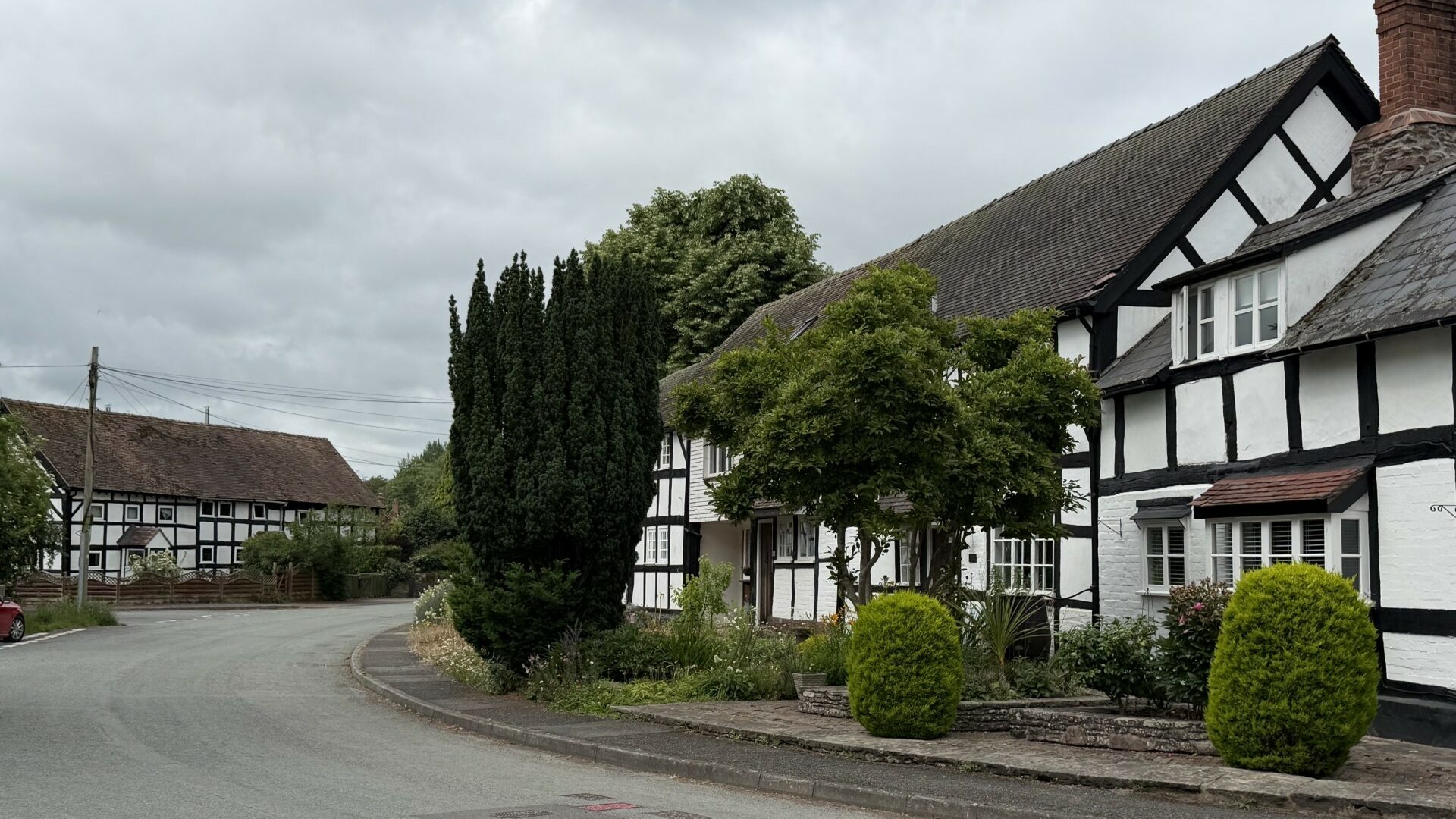
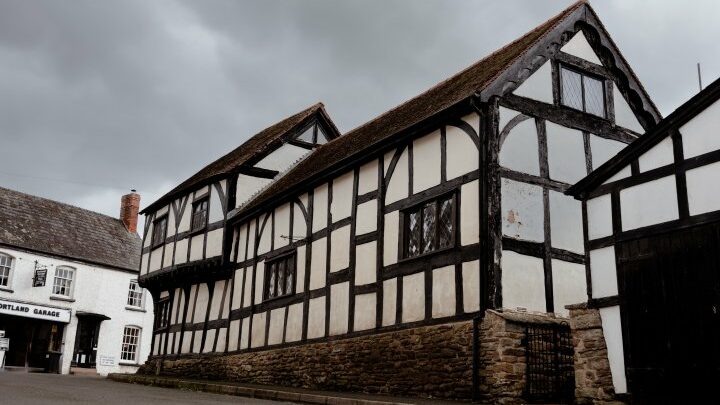
They’re black and white because their oak frameworks have blackened with age, are filled in with white limewashed plaster. It’s like stepping back into Tudor times but without the beheading!
The official Black and White Village Trail is a 40-mile circular route, in your car, starting and finishing in the market town of Leominster. Although you could whip round in a day, there’s so many must see stop offs, it’s best to spread it over a few days to do it justice.
If you don’t want to use the car then try the trail on your bike. The lanes are quiet, mostly flat and very scenic and avoids busy roads.
It’s also possible to explore parts of the trail by bus. Hop on the 495/496 service starting at Leominster bus station. Word of caution – check the timetable on the daily. You’ll only be able to see some villages using the bus and it generally only runs about 4 times a day. For the full medieval experience, you could do the trail on horseback – but you’ll need to find a horse first!
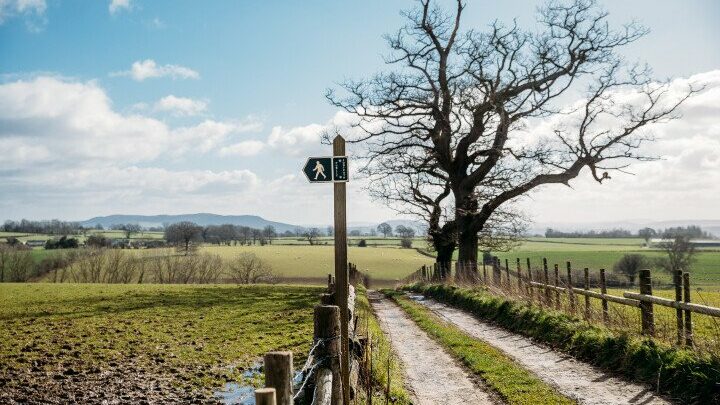
You could go really hardcore and walk between some of the villages – but don’t forget, you’ll have to walk back! However, you travel, brown and white tourist signs marked with a timber-framed building symbol guide you around the route.
Joining the Black and White Village trail from Discover Parks
All three of our parks are ideally placed for the trail. The nearest point on the trail to all three parks is Eardisland. From there you can follow the trail in either direction. You can find route maps at Visit Herefordshire, or by clicking on the links at the end of this blog.
1. Leominster
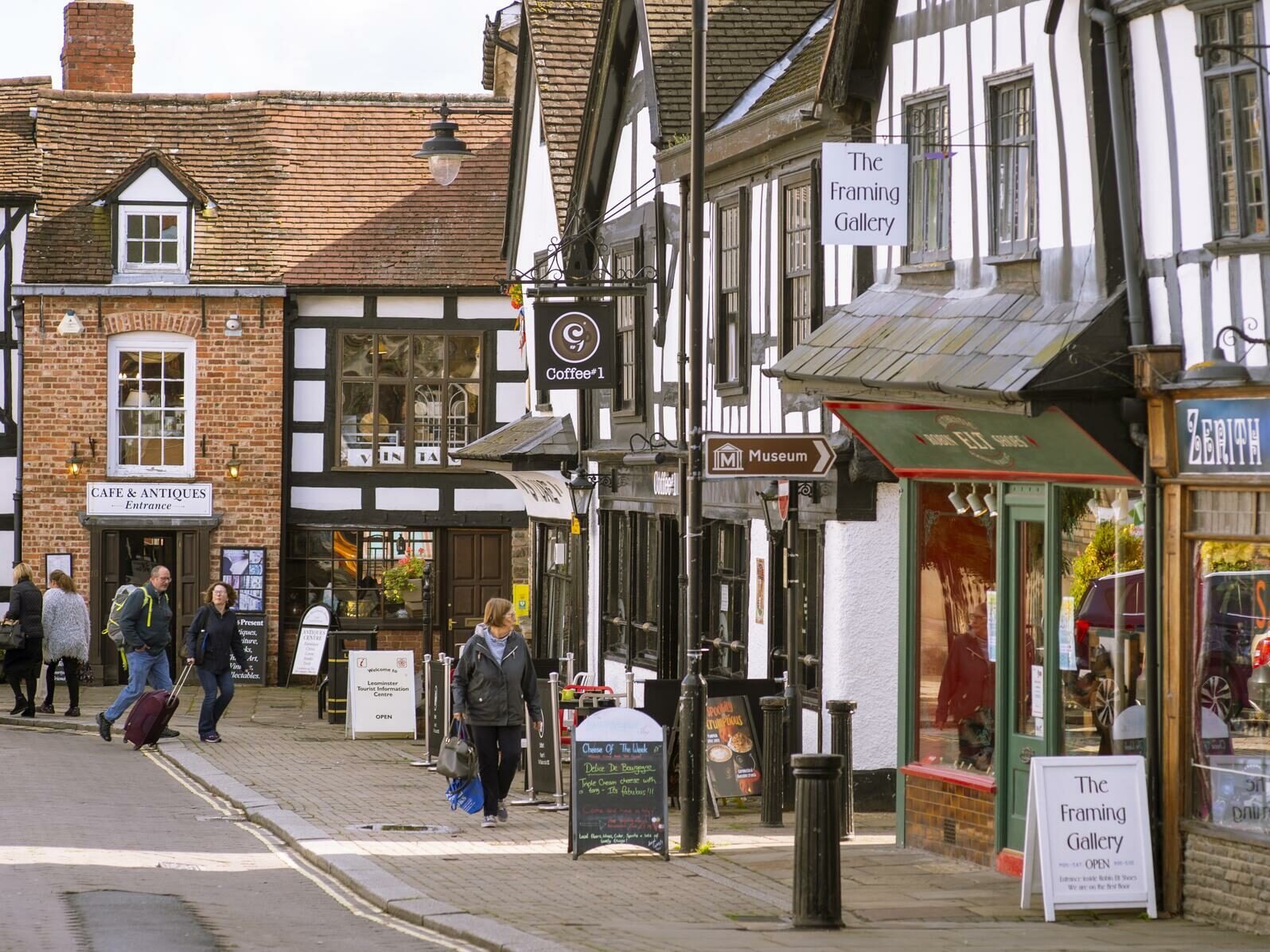
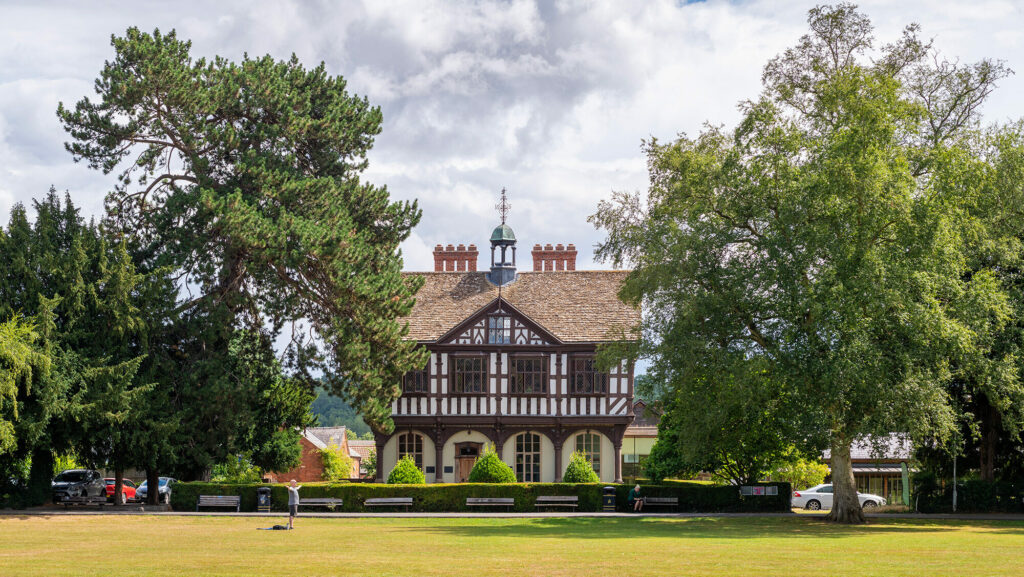
The trail officially begins, and ends, in Leominster (pronounced ‘Lemster’), a thriving market town packed with half-timbered buildings of its own. Don’t miss Grange Court, an intricately carved timber-framed building designed by John Abel, carpenter to King Charles I, whose work you’ll find again at Sarnesfield further along the trail.
Dilwyn is properly picturesque, with its village green, black and white houses, church on the hill and pub. There’s plenty of places to park your car to start exploring the village from. You’ll notice one thing immediately – it’s incredibly peaceful!
Most of the half-timbered Tudor cottages and houses are clustered around the village green but if you walk the lanes there are quite a few more. If you follow the hill opposite the village green, you’ll arrive at St Mary’s Church. A Grade I listed building that dates from the late 13th century, it’s full of ecclesiastical, architectural bits and bobs including the chancel screen and a very impressive porch.
Dilwyn is an 8-minute drive from Arrow Bank, 15 minutes from Pearl Lake and 30 minutes from Rockbridge.
Places to Eat in Dilwyn
The Crown Inn
The Crown is a half-timbered 17th century building that was originally a coaching inn. It serves a variety of food from small plates to hearty mains all of which are home cooked with locally sourced produce. There’s bags of seating front and back to sit and soak up the rural atmosphere.
3. Weobley
(Image Visit Herefordshire)
If you’ve watched the film Hamnet, then Weobley may look a bit familiar. That’s because Weobley was turned into William and Agnes Shakespeare’s 1580 ,Stratford-upon-Avon home for the film. You can read all about that (and other local filming locations) in our filming locations in Herefordshire blog.
BTW just FYI, Weobley is pronounced Webb-lee! Best place to park for a walk around is the Bell Square car park (HR4 8SE).
Down the centuries the village has been a centre for wool production, glove making and ale brewing. A great way to begin to understand the village is on its Heritage Trail. Follow the trail around the village from plaque to plaque which explains the history and what went on in its ancient streets.
One thing you won’t miss is Weobley’s iconic white and pink house. It’s the surviving solar wing of what was once a much grander manor and showcases a number of mediaeval building techniques. The pink is possibly down to the mediaeval practice of adding animal blood to the lime wash to offer greater waterproof protection!
Apart from blood in the lime, other techniques and building styles can be seen in the village. Wattle and daub, cruck framing (where curved oak timbers rise from the floor to the roof ridge) and Wealden houses. Wealden were posh mediaeval homes with central hallways and sections protruding out from the main frame. Many of Weobley’s best buildings are situated in Broad Street.
Wherever you are in the village you won’t miss the spire of the church of St Peter & St Paul. It’s the 3rd highest spire in Herefordshire.
Weobley is an 18-minute drive for Pearl Lake, 12 minutes from Arrow Bank and about half an hour from Rockbridge.
Places to eat in Weobley
Ye Olde Salutation Inn
Ye Olde Salutation Innis a black and whitebuilding and known by locals as ‘The Sal’ It’s in the centre of the village and serves traditional food alongside real ales and selections from some of the county’s micro-breweries.
The New Unicorn Inn
The New Unicorn Innis a timber framed building dating back to the 17th century. It’s a ‘locals’ pub serving lots of good beers and hosting various nights throughout the week including fish and chips on Friday.
Green Bean cafe
The cafe serves teas and coffees, light lunches and homemade cakes. There’s also a shop selling fruit & veg, deli produce and wholefoods.
The Wobbly Badger
The Wobbly Badger is housed in another of Weobley’s black and white buildings. Fairly new, it serves local, seasonal dishes, cold pressed juices, smoothies and more. You can sit outside too and watch the world go by – in black and white of course!
4. Sarnesfield
Sarnesfield is often overlooked on the trail. It’s a quieter stop but well worth a walk around, so turn off the engine and take it all in. The village is named after the Sarnesfield family who had close links to the area from the 12th century.
At the heart of the village is Grade I listed St Mary’s Church – it’s probably worth parking here. Inside you’ll find an Arts & Crafts WW1 memorial window designed by Christopher Whall, a leading post-war, stained-glass window artist.
The churchyard contains a real piece of living history: the grave of John Abel, King Charles I’s carpenter, known as the ‘Sarnesfield Carpenter’ He also created Grange Court in Leominster and many other Herefordshire timber framed buildings.
Stand at the grave of John Abel and marvel at the man responsible for many of the buildings you’ll see on the trail.
5. Kinnersley
(Image Visit Herefordshire)
It may be small, but Kinnersley’s got a Castle! It’s the first thing you’ll see as you approach the village on the A4112. Originally one of the many ‘Marches’ castles built by the Normans to spearhead attacks on Wales. The castle today is family owned and is the remodelled manor house. It’s open to the public on certain dates which you can check out on the castle website.
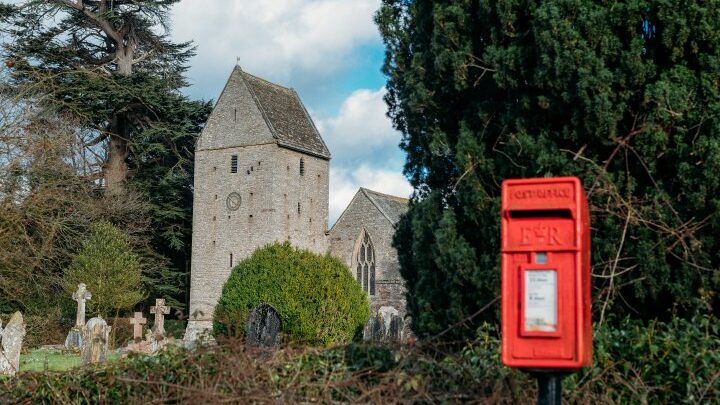
St James Church is just next door and there’s some free parking here. The church has an unusual saddleback tower – where the tower has a double sloping roof and triangular gable ends. The interior was designed by Victorian church architect, George Bodley. He’s buried in the churchyard along with his wife, Minna, whose family also owned Kinnersley Castle. Keeping it nice and local!
6. Eardisley
(Image Visit Herefordshire)
You’ll find many of Eardisley’s black and white buildings along the village’s main street. It’s a busy street, I can’t lie and you will see quite a few lorries rumbling through on their way to or from the quarries the other side of Kington.
That said, there’s bags to see in the village which I’d describe as bustling. Park up either on the main street, or by the church or opposite the shop in the village hall.
Some of the numerous black and white buildings date back to the 14th century. It’s well worth a walk up and down the main street, which is Church Road, to take a look.
St Mary Magdalene Church is just opposite the village school and contains one of the finest Norman fonts in England. It was carved in 1150 by a group of itinerant masons known as the Herefordshire School of Romanesque Sculpture. These were travelling masons whose work can be seen in other churches in Herefordshire including Kilpeck and Shobdon.
Just outside the village stands the Great Oak of Eardisley. This is a pedunculate oak (that’s the species) and it’s around 800-900 years old. And I can legitimately use this word here; it has a girth of 9 metres – so it’s massive. Thought to be the oldest and largest tree in Britain! It’s in the hamlet of Great Oak (seriously!), just off Woodseaves Road. It’s hollowed out so you can have a look inside.
Also on Woodseaves Road is the old village pump in its little brick house. The pump supplied water to the village until the 1960s.
Eardisley is 20 minutes in the car from Pearl Lake, just over 15 minutes from Arrow Bank and 35 minutes from Rockbridge.
Places to eat in Eardisley
New Strand
The New Strand is quite something as it wears a number of hats. It’s a pub, restaurant, bookshop, community hub and Post Office all in one building!
It feels like it could be someone’s lounge! The food is all home-made and nice and traditional. You can have some breakfast, followed by a nice cuppa, peruse the books in front of the fire with a pint in hand. Then you can write about your day on a postcard, buy a stamp and post it! Do it on a Sunday and you can have a roast too!
7. Kington
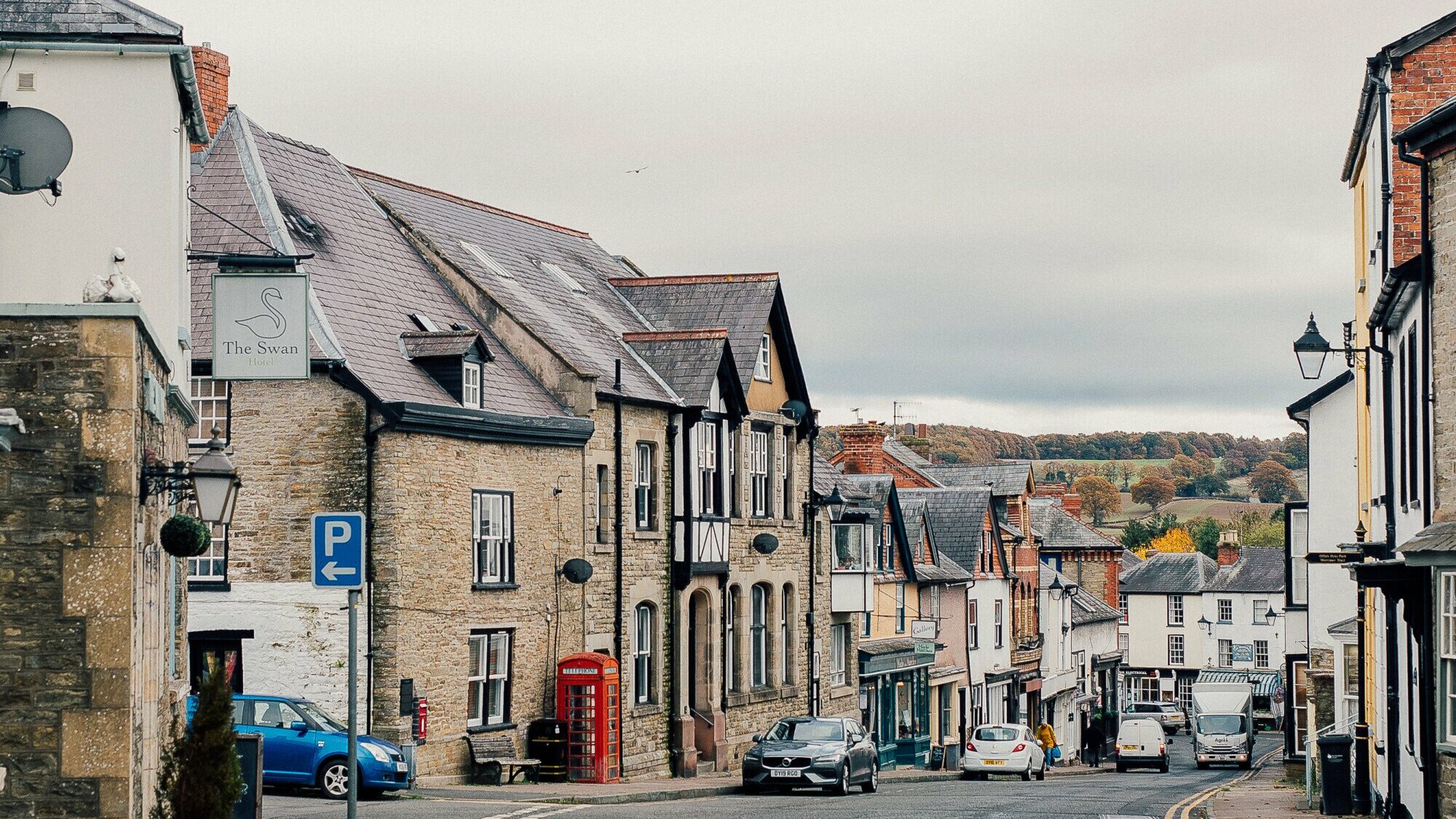
Kington is one of Herefordshire’s five market towns, sitting right on the English-Welsh border. There’s lots of free parking at Love Lane, High Street and Hergest Ridge East. Many of Kington’s buildings are 300 years old or more, and it boasts the highest golf course in England. Find out more in our golf blog
The town is a well-known centre for walking — the Mortimer Trail and Offa’s Dyke path both pass through. Just outside the town is the beautiful Hergest Croft Gardens, home to over 5,000 rare plants, trees and shrubs. If you’re cycling the trail, Kington makes a natural midway stop.
Kington is 15 minutes drive from Pearl Lake and Arrow Bank and 30 from Rockbridge.
8. Lyonshall
(Image Visit Herefordshire)
Lyonshall is first found in the Domesday Book as ‘Lenehalle’. Coming from the A44 you’ll first find the imposing church of St Michael and All Angels which sits up high overlooking the village. It’s probably the best place to park, otherwise it’s in laybys and pull-ins. Constructed in 1250 and updated down the centuries, its position gives it a quite different feel to many churches.
Here’s a funny thing though. There’s a headless effigy in the south aisle dating back to the 13th century. But nobody knows who it’s supposed to be!
Alongside the church are ruins of what was once a large and imposing moated castle. The castle was a major fort in warding off the invading Welsh! The remains of the castle are some of the best preserved in the county. However, they’re on private land and not open to the public, but there’s a public footpath by the church from which you can see some of the earthworks.
The main village lies half a mile from the church along the A480. The Black Death of 1348–50 effectively split the village in two, as survivors rebuilt their homes well away from the original site, leaving the church stranded on the hill.
Although Lyonshall doesn’t have as many black and white buildings as others on the trail, there are some excellent examples.
9. Pembridge
(Image Visit Herefordshire)
All Herefordshire’s black and white villages are stunning. But Pembridge might just edge it into top stop. Park your car in the free car park on the A44/Bridge Street. It’s an ideal place to start your black and white village walk adventure.
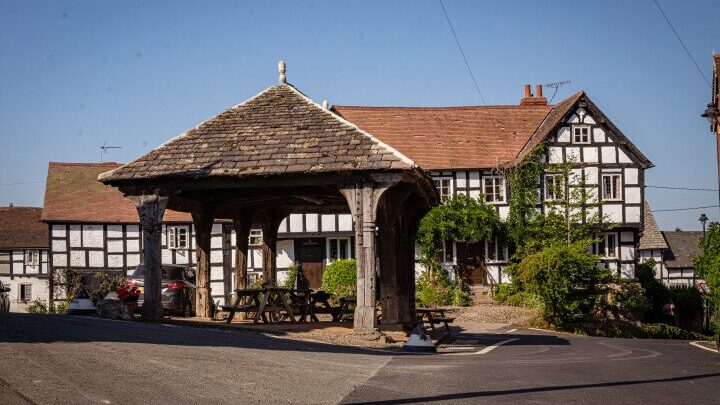
The village was first documented in the Domesday Book and received a Royal Charter in 1239. Many of the buildings date from 15th and 16th century including the iconic Market Hall. It’s the only surviving single story black and white market hall building in the county.
From the market square you’ll find the 13th century parish church of St Mary’s. Another unique building where the pagoda-style bell tower is detached from the church. It houses the clock and a ring of 5 bells.
Although not black and white, the Old Chapel Galleryis well worth a visit. It showcases contemporary British arts and crafts in, well… an old chapel.
Just along from the Old Chapel is another gorgeous black and white building – Ye Olde Steppes. You do have to go up some quite steep steps to access the building, but it’s worth it. It’s a tearoom as well as a shop that seems to sell everything.
Pembridge is a 5-minute drive from Pearl Lake, 6 mins from Arrow Bank and 14 mins from Rockbridge.
Places to Eat in Pembridge
The New Inn
The New Inn stands in front of the market hall. Some parts of this black and white building date back to the 14th century, so it’s seriously old and full of character at every turn. On a hot day you can eat and drink in the garden surrounded by other black and white buildings or if it’s chilly snuggle up to the open fire. It’s dog friendly.
The Red Lion
The Red Lion is just opposite. Another black and white banger with a legendary ‘fish ‘n chip’ night on a Tuesday. It feels like a real local and Cliff the Landlord gets lots of accolades. It’s dog friendly too.
Bloom and Grind
Bloom and Grindis on the corner of Bridge Street and East Street and does great coffee to drink in or takeaway as well as a fine selection of cakes and hot food. They also sell gifts, cards and fresh flowers!
The King’s House
The King’s House is further down East Street. Brunch, lunch, afternoon tea and Sunday lunch are served in this stunning 16th century building.
10. Eardisland
Arrow Bank Country Holiday Park is nestled on the edge of what many consider is Herefordshire’s prettiest village. Because it’s a 5-minute walk from Arrow Bank and there’s so much to see, we’ve done a blog devoted to Eardisland
Arrow Bank is in Eardisland. Pearl Lake is a 5-minute drive and Rockbridge a 15-minute drive away.
11. Kingsland
(Image Visit Herefordshire)
Despite being the least visibly black and white of all the black and white villages it’s still a stunner. The village is full of history with plenty of buildings to marvel at including traditional cottages and farmhouses.
Best place to park is the Coronation Hall car park (HR6 9SQ) near the Corners Inn
The ground on which the parish church of St Michael and All Angels has been a sacred space since pre-Medieval times. The church is big for a relatively small village and has a Gothic tower which is largely intact.
Close to the church are the earthworks of a motte-and-bailey castle, known locally as The Mound.
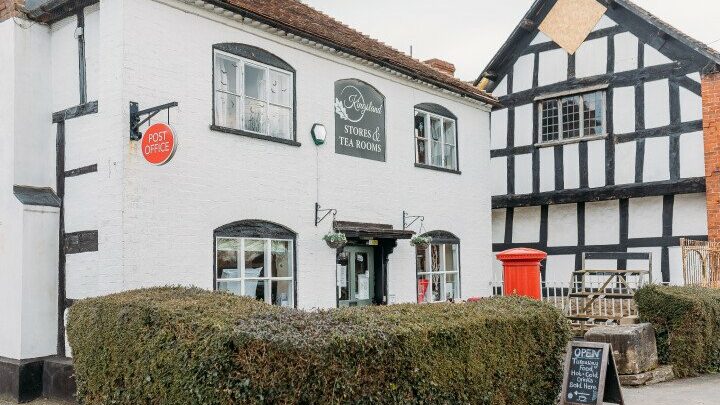
Along the main street, among the black and white houses are 2 pubs and a village stores and tearoom. There’s also a village green where you can have a sit down and take it all in.
Kingsland is a 6-minute car drive from Pearl Lake and Arrow Bank and 17minutes from Rockbridge.
Places to eat in Kingsland
Village shop and tearooms
The village shop and tearooms serves coffee and tea, toasties and cakes. They’re open for breakfast, lunch and afternoon tea.
The Angel
The Angel is black and white inside and out with views of the church and village green. It’s got an extensive menu serving everything from posh fish and chips to duck with lime mash. There’s a good wine list, plus local ales and ciders.
The Corners Inn
The corners is actually on a corner! The building dates from the 17th century and was originally a house and barn. History shows that Kingsland once had 7 inns..but only the Corners and the Angel have survived. The Corners runs special pie nights and steak nights so there’s plenty of choice on offer.
Plan your trail
The full circular route is 40 miles and marked throughout with brown and white tourist signs. You can travel the route by car, bike, or bus, and Visit Herefordshire have created these handy route maps for whichever method you pick.
We’re on the black and white trail too – but we’re full of colour!
Our three parks, Arrow Bank, Pearl Lake and Rockbridge put you right at the heart of the trail.
There are three ways to stay with us. Rock up in your tourer, tent or motorhome. Our 5* sites with fully serviced pitches have all the facilities you need. Spend some time in our self-catering accommodation. We’ve got luxury lodges with hot tubs and saunas, classic caravans and historic cottages. Or join us as owners, and make Herefordshire your bolt hole break whenever you want to escape.
Clare Fischer
Editor
Clare Fischer is a Herefordshire born and based journalist who spent almost 20 years as a local radio broadcaster for BBC Hereford & Worcester. She then moved into PR for the Marine Conservation Society where she edited a bi-monthly members magazine and co-authored the book 'How to Live Plastic Free'. She's dabbled in standup comedy and did podcasts before they were cool.